
STRONGER THAN FENTANYL A NEW DRUG NITAZENES IS SWEEPING EUROPE
ORIGINATING FROM CHINA, THIS DANGEROUS OPIOID CAN ENTER INDIAN MARKET ALSO

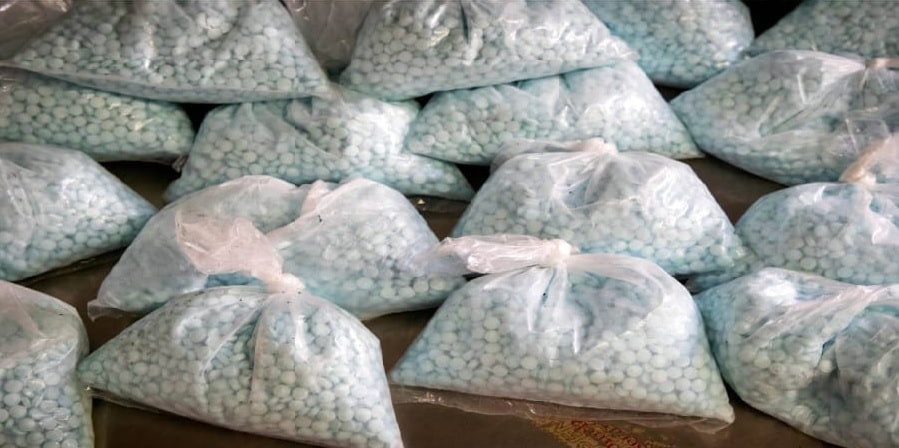
A new synthetic opioid menace has emerged — Nitazenes. More potent than fentanyl and a hundred times stronger than heroin, these lab-created opioids are rapidly claiming lives in the United Kingdom and quietly threatening to infiltrate the United States and India as also other countries in south Asia and southeast Asia. With production networks rooted in China and the potential to align with Mexican cartels, Nitazenes
could fuel a drug epidemic even deadlier than the one already plaguing North America.
Nitazenes are synthetic opioids first developed in the 1950s as potential painkillers but were deemed too dangerous for human use. They include variants like etonitazene, isotonitazene, protonitazene, and metonitazene, many of which are five to ten times more powerful than fentanyl, itself one of the deadliest drugs on the planet.
These substances began appearing on the dark web and in European forensic reports in 2019. Sold in
powdered form or pressed into counterfeit tablets resembling Xanax, Valium, or Oxycodone, all anti-depressants or pain killers, Nitazenes are often consumed unknowingly, leading to swift and often irreversible respiratory failure.
Nitazenes are a group of benzimidazole opioids originally synthesized in the 1950s but never approved for medical use. These substances re-emerged around 2019 on darknet markets, most prominently originating in Chinese labs, shipped via post to Europe and the U.S.
First detected in the UK in 2021, Nitazenes were often mixed into heroin or fake pills, leading users to overdose unknowingly. Several early fatalities include two men in Abingdon-on-Thames who thought they were smoking heroin when they were ingesting isotonitazene.
Between June 2023 and May 2024, 179 deaths in England were confirmed to involve Nitazenes, with individual cases tied to substances such as protonitazene (73 deaths), Ndesethylisotonitazene (46),
metonitazene (34), and others. Reports suggest that total UK deaths involving synthetic opioids, including nitazenes, may exceed 400 over the past 18 months. In Scotland, suspected nitazene-linked deaths reached 312 between March and May 2025, the highest quarterly count in a decade.
Nitazenes are frequently found in fake benzodiazepine pills such as Xanax (alprazolam) or Valium (diazepam), as well as in counterfeit oxycodone tablets. Many users believed they were taking legitimate sedatives or painkillers, only to succumb to overdose. This dangerous mixing is partly driven by a global heroin shortage (notably due to decreased poppy output from Afghanistan), prompting traffickers to adulterate street drugs with potent synthetics to maintain potency and profits.
The Directorate of Enforcement Authority(DEA) warns that Mexican cartels could leverage their existing networks and linkages with China-based opioid producers to funnel Nitazenes into the U.S., replicating the fentanyl crisis scenario. Between 2019 and early 2025, Nitazenes have appeared in at least 4,300 drug
seizures in the U.S., often found alongside fentanyl in mixed samples, and linked to a growing number of overdoses—though underreported because many toxicology screens don’t test for them.
If Mexican cartels collaborate with China-based chemical producers—as seen in fentanyl supply—Nitazenes could be produced and smuggled into the U.S., driving a second, even more lethal wave of overdoses. Given nitazenes’ extreme potency, infiltration into counterfeit pharmaceuticals or street heroin
in the U.S. could be catastrophic, especially since standard opioid testing panels typically don’t detect Nitazenes.
Nitazenes are the most lethal synthetic opioids to emerge in decades. With hundreds of avoidable deaths in the U.K., authorities are scrambling to break the supply chain and build harm reduction infrastructures—
including naloxone programs and rapid testing systems. In the U.S., the DEA is alert to cartel-China collaboration risks and emphasizing expanded detection, seizure, and early warning capabilities before history repeats on an even larger scale.
India has emerged as a key exporter of fentanyl precursors like NPP and ANPP. A 2018-19 DEA-linked investigation uncovered Indian middlemen supplying chemicals to Mexican cartels, often redirected from
China due to tightening controls there.
In March 2025, India’s Gujarat Anti-Terrorist Squad arrested two business partners in Surat for smuggling at least 100?kg of precursors disguised as “vitamin?C” to Mexico and Central America via multiple shipments — estimated profit margins of 7–8?× over cost. India’s regulatory environment under the NDPS Act (with updates through 2021) controls precursors—but the law has lagged behind analogue proliferation, leaving
new chemicals unregulated until formally scheduled.
While precise data on Nitazenes or fentanyl deaths in India remain scarce, small clusters have been detected in urban forensic labs. Official overdose reporting systems are incomplete, but awareness and toxicology capacities are ramping up gradually. Experts estimate deaths are undercounted but increasing in
metropolitan drug-using populations.
In USA, there were 110,000 overdose deaths in 2022, of which ~75,000 involved synthetic opioids like fentanyl (~70% of total). Among younger Americans (15–24), 81% of overdoses involved fentanyl s. The U.S. seized over 115 million fentanyl pills in 2023—a 2,300× increase from 2017.
In UK from June 2023 to May 2024, 179 confirmed nitazenerelated deaths in England alone— split by compound (e.g. protonitazene 73, Ndesethylisotonitazene 46, metonitazene 34). The National Crime Agency estimates 278 deaths in a year involving nitazenes. UK authorities seized 150,000 nitazene-containing pills in London in October 2023—the country’s largest synthetic opioids bust—including pill presses, cash, crypto and firearms
As regards Ind ia, precise fatality numbers are not public, but rising detection of fentanyl precursors and isolated overdose incidents suggest nascent spread — enforcement focus is currently on precursor exports rather than domestic consumption.
U.S. Customs and Border Protection reported seizing 21,100 lb of fentanyl through the southern border in 2024 (˜?96.6% of total seizures); nearly all fentanyl precursor shipments originated via Mexico using Chinese/Indian sourcing networks. Global seizures of fentanyl pills exploded to 115+ million items in 2023,
signifying cartel-scale manufacturing and distribution. Indian cases alone involved at least 100?kg of fentanyl precursors.smuggled in 2024–25, potentially feeding production of billions of lethal pills.
The market value of these opioids is enormous: Drug enforcement agencies estimate street value per gram of fentanyl or precursor in India can fetch ~?1 lakh (˜?$1,200 USD), making large shipments worth tens or hundreds of millions of dollars.
Gujarat ATS cracked down on precursor exporters—arresting companies and individuals for smuggling banned chemicals to cartel networks. Companies in Surat and Hyderabad are under scrutiny or indictment in the U.S. The Indian Express+2The Indian Express+2Reddit+2.VasudhaPharmaChem Ltd. executives were indicted in Washington D.C. for distributing fentanyl precursor chemicals destined for illicit manufacturing
in Mexico and the U.S. justice.gov+1The Indian Express+1.
India updated the NDPS Act, adding precursors NPP and ANPP as Schedule B (2018) and Schedule A (2020), tightening export restrictions. Nonetheless, the law remains reactive, not predictive, for emerging
analogues.
Indian agencies including NCB, DRI, and NIA now operate crossborder investigations, collaborating with U.S. DEA, DOJ, FBI and Mexican authorities. Intelligence sharing through international bodies is improving.
Yes—there’s a more concerted global approach than in previous decades: The UNODC and INCB flagged nitazenes and fentanyl analogues as urgent global threats in their latest reports, urging standardized scheduling and information-sharing.
The DEA, CDC, UK Home Office and European agencies maintain an Early Warning System, sharing forensic data, overdose spikes, cloud-based alerts, and shipping intelligence (postal and cargo) to detect emergent threats early on U.S. 2025 Annual Threat Assessment publicly names India and China as sources of precursor chemicals and equipment, highlighting transnational smuggling routes and cartel adaptation.
Nitazenes amplify the fentanyl crisis by layering an additional layer of potency and stealth into the global drugs supply. India’s pharmaceutical sector has become an increasingly significant source of precursors for cartel networks, while countries like the UK grapple with domestic mortality and the U.S. sees record-setting seizures.
While there is no evidence of Nitazenes opioids being made in India by unlicensed pharma’s or drug intermediaries, there is clear evidence of Nitazenes originating from China and smuggling into UK to local drug dealers and peddling gangs through the drug supply chains.
International coordination—from law enforcement collaboration to unified scheduling, enhanced toxicology screening, expanded naloxone access, and global earlywarning systems—is underway— but still reactive. As drug networks adapt chemically and geographically, governments must stay one step ahead.

Comments are closed, but trackbacks and pingbacks are open.