
ZELENSKY’S FINAL POSITION IS STILL CRUCIAL FOR SUCCESS OF ALASKA SUMMIT
TRUMP IS UNDER TREMENDOUS PRESSURE TO MAKE AUGUST 15 MEET TRILATERAL

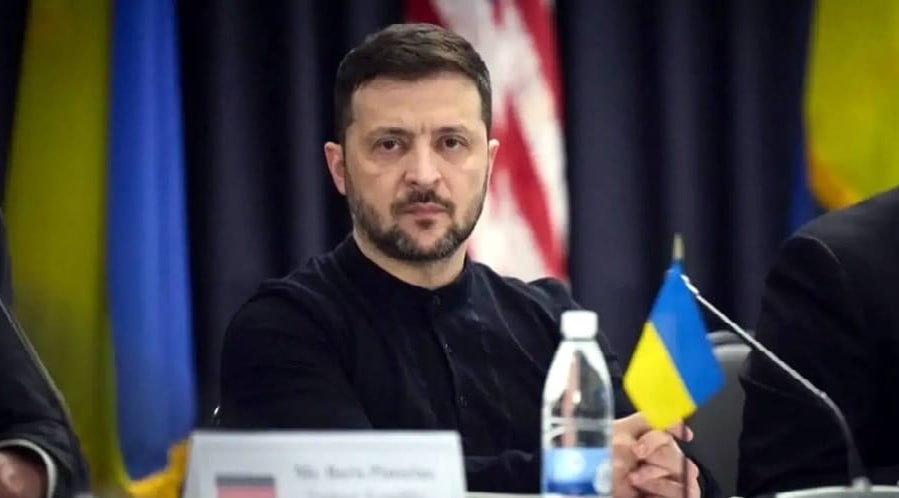
The upcoming August 15 summit between Presidents Donald Trump and Vladimir Putin in Anchorage, Alaska, has become the hot topic of world leaders and the media, for its potential to reshape the trajectory of the Russia-Ukraine war.
But the conspicuous absence of Ukrainian President Volodymyr Zelenskyy from the meeting agenda is not lending much credibility or validation for the summit to produce any meaningful results as its onesidedness
does not augur well for Ukraine that has fought the Russian aggression for over three and half years
European leaders, who have been supporting Ukraine so far including its entry into NATO, now feel that its interests must be protected in the forthcoming Trump-Putin talks.
Just as Trump had been saying no initiatives on a ceasefire in Ukraine war is meaningful unless it had U.S.
presence, European leaders think likewise and want their voice heard, which undoubtedly goes in favour of Zelenskyy. White House too after an internal meeting now feels that Zelenskyy ought to be included.
Initially framed as a one-on-one diplomatic breakthrough between the American and Russian leaders, the meeting has now become the subject of intense lobbying by European heads of state, who insist that Ukraine must have a voice in any negotiated settlement. Over the weekend, that pressure culminated in a joint statement from a coalition of European powers, warning that peace “cannot be decided without Kyiv” and demanding “robust and credible” security guarantees for Ukraine.
The European leaders’ message was unmistakable: without Zelenskyy in the room, any accord reached in Alaska risks being dead on arrival.
The joint declaration, signed by the president of the European Union and the leaders of France, Germany,
Italy, Poland, Finland, and the United Kingdom, was both a show of unity and a subtle rebuke to Washington. Its core points were threefold- peace with participation, security guarantee and borders with
sovereignty.
The statement also made an effort to recognize Trump’s efforts— saying they “welcome President Trump’s work to stop the killing”— but the subtext was clear: the Europeans are concerned about the possibility of a bilateral deal between Washington and Moscow that trades Ukrainian territory for a ceasefire, something they see as both morally unacceptable and strategically destabilizing.
When Trump first announced the Anchorage meeting, Putin reportedly insisted on a strictly bilateral format, excluding Zelenskyy. This fits Trump’s longstanding preference for high profile, leader-to-leader
diplomacy, where he believes personal chemistry and deal-making can achieve what bureaucratic negotiations cannot.
But several factors have since pushed the White House to reconsider. These include European pressure, Zelensky’s resistance , domestic optics and strategic leverage. According to CBS sources, Trump remains open to a three way meeting but as of now, Putin’s preference for a bilateral session at Alaska stands as the official plan. But in the next seventy two hours, if Trump can persuade Putin to agree to Zelensky’s
participation, it can turn out as trilateral summit. But the present scenario is that if an understanding is reached at Alaska bilateral meeting on August 15, it can be followed up by Putin-Zelensky meeting for finalizing the deal.
Despite the heavy symbolism of the first Trump-Putin face-to-face since the full-scale invasion of Ukraine
in February 2022, the practical agenda is relatively narrow: Trump’s team has been pressing Moscow to agree to an immediate halt to hostilities, at least along major front lines. The Kremlin has thus far conditioned any ceasefire on Ukraine ceding occupied territories. Trump himself has floated the idea of a “territory swap” as part of a settlement— remarks that triggered backlash from Kyiv and skepticism from
European capitals. While the Europeans want NATO-compatible protections for Ukraine, Russia’s position is that Kyiv must abandon its NATO bid altogether and limit its military.
Trump has threatened further sanctions and secondary tariffs on nations buying Russian oil if Putin doesn’t show progress toward peace at the summit. This gives Trump a bargaining chip but also risks alienating countries like India and Turkey.
In essence, the Anchorage meeting is about testing whether Putin is willing to entertain a politically sellable ceasefire plan—or whether both leaders will simply use the optics of the summit to advance their own strategic narratives.
For Trump, the political incentives are obvious: A Historic “Deal” – A ceasefire, even a temporary or partial one, would allow him to claim he ended the bloodiest European war in a generation. A Foreign Policy Win Before the Midterms – securing headlines about “Trump ending the war” could blunt domestic criticism and overshadow other controversies. Reasserting U.S. Primacy by sidelining EU-led negotiations and
forcing talks under American auspices, Trump can reinforce the idea that Washington—not Brussels—is the ultimate power broker in Europe. Economic Stability calming the war could reduce global energy prices, aiding U.S. inflation control and boosting markets—a direct benefit to his reelection narrative.
But Trump is also gambling: if the talks fail, he risks being portrayed as naïve about Putin’s intentions— or worse, complicit in legitimizing Russian territorial gains.
Putin’s calculus is equally pragmatic: Sanctions Relief – even partial concessions from Washington on sanctions would be a win, especially given the strain of a prolonged war on Russia’s economy. Further, a bilateral deal with Trump could drive a wedge between the U.S. and its European allies, weakening NATO unity. Simply appearing as an equal partner to the U.S. president on the world stage strengthens Putin’s
domestic image and signals to other powers, like China and India, that Russia is not isolated.
In short, Putin’s goal is to extract maximum political legitimacy and economic breathing space while giving up as little as possible militarily. Analysts warn that Putin’s negotiating style often involves agreeing to terms he does not intend to honour fully, using them as tactical pauses to regroup militarily or politically. If
Anchorage produces a deal without robust enforcement mechanisms, the likelihood of a durable peace is
low.
For Zelensky, the Alaska summit presents a diplomatic paradox. On one hand, exclusion from the talks risks marginalizing Ukraine in decisions about its own sovereignty. On the other, participation in a process perceived as favouring territorial concessions could weaken his domestic standing and embolden opposition at home.
Ukrainian officials have signalled in private that they might accept a de facto freeze of current battle lines
if it means halting the bloodshed and buying time to rebuild military strength. But Zelensky has drawn a red line against formal territorial surrender, declaring Saturday that “Ukrainians will not give their land to the occupier.”
This rhetorical firmness serves multiple purposes: maintaining national morale, keeping Western military aid flowing, and signalling to Moscow that Ukraine still has leverage in any future talks
The Anchorage summit is more than a test of whether Trump can “make a deal” with Putin—it is a trial of the post–Cold War order. If a U.S.- Russia agreement sidelines both Ukraine and its European allies, it will signal a shift toward great power transactionalism, where smaller nations’ sovereignty becomes negotiable currency in superpower bargaining.
Conversely, if the U.S. bows to European pressure and brings Zelenskyy into the process, it could reaffirm the principle that peace settlements must involve the directly affected nation, preserving at least some integrity in international norms.
For now, all eyes are on Anchorage. The official agenda is still in flux, the guest list unsettled, and the geopolitical stakes immense.
Whether Trump emerges with a “historic peace” or a failed photo op will depend on three unpredictable variables: Putin’s willingness to compromise, Zelensky’s ability to hold his ground, and Trump’s own
calculation of what serves him best politically.
But one truth remains constant: without Ukraine in the room, any deal struck in Alaska will be fragile at best—and at worst, a prelude to the next, bloodier chapter in the war.

Comments are closed, but trackbacks and pingbacks are open.