
India Must Navigate Global Protectionism, Trump-Era Tariffs, and the 8% Growth Test

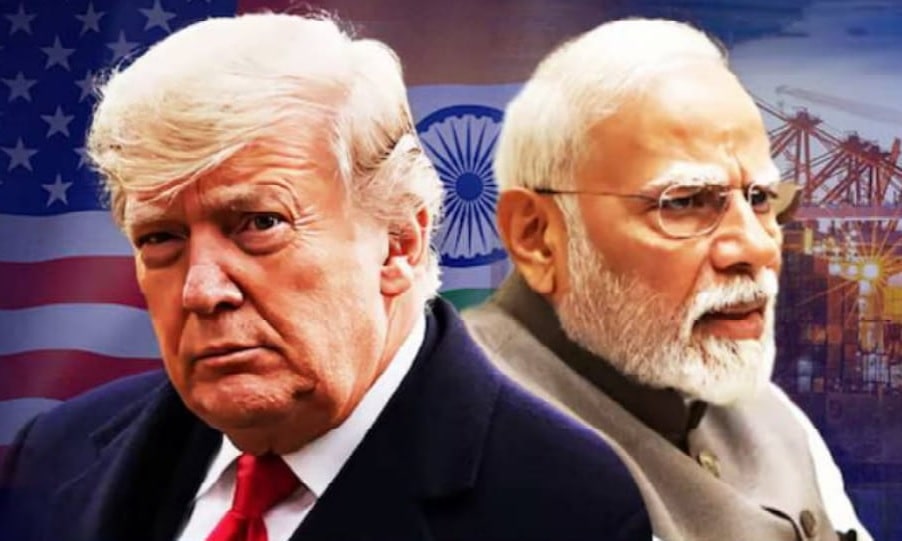
The global economic order is being rewritten. Wars in Europe and West Asia, US–China rivalry, the return of tariffs, and the erosion of multilateral institutions have turned trade into an arena of power rather than rules. Trade is now about security, resilience, and influence as much as growth. For India, this presents both a strategic challenge and an opportunity.
Until a decade ago, global trade was anchored in gradual liberalisation under the WTO, with major economies tolerating asymmetries in the name of development. That consensus has collapsed. Protectionism and economic nationalism are back, and globalisation is now viewed with growing scepticism.
Would BRICS be a choice? It is thawed for now with US super-activism. Venezuela was struck for trying to get closer to BRICS as also trading its oil in yuan and rouble. And India conveniently put off the military drill by the BRICS partners off the South African coast.
Amid this India’s 7.4 percent growth is an achievement over not so high growth during the period in the previous year. The country needs 8 plus percent growth continuously.
It also has to reduce its tax rates and work for faster growth. Rail fares raised twice in a year. Taxes on several products increased to generate additional revenue for reducing deficit. It leads to inflation and pressurises the rupee.
Trade policy today is conditioned by geopolitics. National security concerns shape export controls, industrial subsidies, and investment screening. The principle of non-discrimination has given way to “friend-shoring” and selective decoupling. The WTO’s dispute settlement system is paralysed, and multilateral negotiations are largely frozen. This new reality has made trade choices harder for all countries and especially for India, with tough US stance.
India’s Trade Reality: More Advanced Than Its Policy
India’s external trade profile has changed quietly but decisively. While trade still forms a modest share of GDP, its composition has shifted sharply toward higher value. India is no longer a low-end exporter: services such as IT, finance, design, and R&D are globally competitive, and goods exports now include pharmaceuticals, engineering products, chemicals, and electronics components.
The US and EU dominate India’s export markets, reflecting deep integration with advanced economies. Indian firms—from Tata and Mahindra to Infosys, Wipro, HCL, and Airtel—operate globally, alongside expanding public-sector Maharatnas. India already operates as a high–value, outward-oriented economy, but its defensive trade policy lags this reality—at rising cost.
The Collapse of Multilateral Comfort
India long used the multilateral system to protect policy space, claiming special treatment under GATT and the WTO while resisting deeper commitments. The strategy worked when multilateralism was functional. That world has ended. With the WTO stalled, trade has shifted to reciprocal bilateral and regional deals—an arena where India remains hesitant, with few FTAs and difficulty securing favourable terms.
Venezuela, and the Economic Coercion
The re-politicisation of trade has been most visibly symbolised by Trump-era tariffs, which shattered the assumption that advanced economies would indefinitely tolerate trade imbalances. Tariffs became blunt instruments of domestic politics, justified openly in the name of jobs, factories, and national security. Crucially, this approach did not disappear with Trump; it has become structurally embedded in Western trade policy.
For India, this creates both opportunity and risk. Trade wars between major powers open space for alternative suppliers and manufacturing hubs. But they also make market access volatile and conditional. Indian exports now face a world where tariffs and non-tariff barriers can be imposed overnight, justified by strategic interests rather than WTO rules.
At the extreme end lies Venezuela, a cautionary tale of how sanctions, trade isolation, and overdependence on a narrow export base can devastate an economy. Venezuela’s experience shows that trade and finance can be weaponised to the point of economic paralysis.
For India, the lesson is clear: diversification of trade partners, payment systems, and supply chains is no longer optional—it is strategic insurance.
BRICS: Hedge, Not Haven
It is in this context that BRICS has gained renewed relevance. Once a loose grouping of emerging economies, BRICS is increasingly seen as a platform to hedge against Western protectionism and sanctions diplomacy. Its expansion, focus on development finance, and exploration of trade in local currencies reflect a shared desire to reduce vulnerability to unilateral economic coercion.
For India, BRICS offers possibilities. It can help diversify trade, secure energy and commodities, and provide diplomatic leverage. But BRICS is not a substitute for global integration. China’s overwhelming economic weight, limited intra-BRICS trade complementarities, and divergent political systems constrain its potential. India cannot replace access to US and European markets with BRICS alone.
BRICS, therefore, is a balancing instrument, not a destination.
Three Trade Futures for India
Against this backdrop, India faces three strategic choices: Trade Zero, Diet Trade, and Trade Regular.
Trade Zero prioritises the domestic market, using trade mainly to manage surpluses while shielding producers. It limits political risk but offers weak growth and risks marginalising India in a world demanding reciprocity.
Diet Trade is a middle path, deepening trade with trusted partners in high-value goods and services while protecting sensitive sectors. It may deliver incremental gains but falls short of India’s ambitions.
Trade Regular is the most ambitious option, positioning India as a hub linking major economies through deeper integration, upgraded agreements, and domestic reforms. It demands higher standards and reciprocity but offers the greatest rewards in markets, technology, capital, and influence.
Top of Form
The Choice India Is Already Making
In practice, India’s economy is already moving towards Trade Regular. Its firms are global, its services exports depend on openness, and its growth aspirations require external demand and technology. What lags behind is policy.
Defensive postures may preserve short-term comfort, but they weaken long-term competitiveness. In a world of Trump tariffs, Venezuela-style sanctions, and fragmented supply chains, trade policy must be strategic, not reactive.
Conclusion: From Hesitation to Strategy
India stands at an inflection point. The global economy is more unstable, more transactional, and more power-driven—but also more open to new hubs and trusted partners. India has the scale, skills, and strategic relevance to play that role. What it needs is a trade policy that reflects its economic maturity and geopolitical weight.
In a world where tariffs punish complacency, sanctions isolate the unprepared, and blocs like BRICS offer partial shelter, India must move from hesitation to strategy. Trade is no longer ideology. It is power—and India must learn to wield it deliberately.

Comments are closed, but trackbacks and pingbacks are open.