

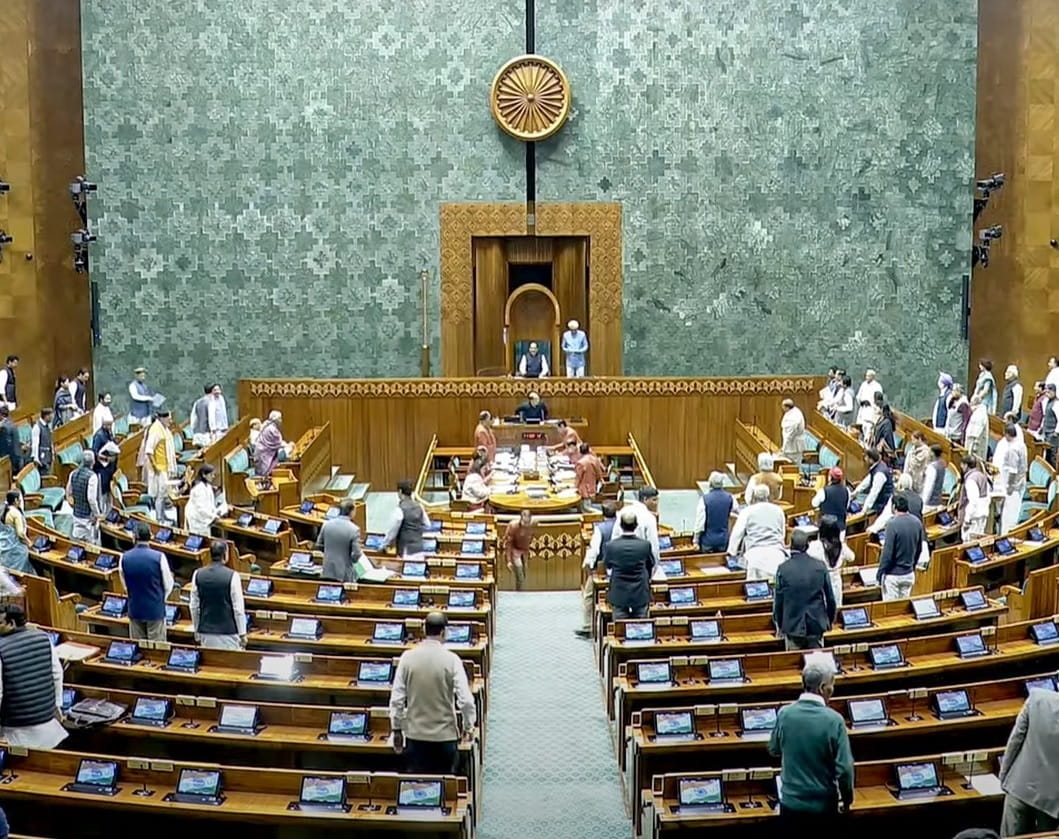
It has been a week of hungama. The opposition has the upper hand and the government even could not either assuage the opposition or satisfy it.The prime minister could even not reply in the Lok Sabha to the motion of thanks and the Leader of the Opposition seems to have overrun the House as Speaker Om Birla did his best to resist him. Ultimately leading to a no-trust motion notice being filed against the Speaker.
The pattern of the debate was on predictable lines. The ruling party members giving the credits of the achievements of the budget to the prime minister extolled it. And from LoP to almost all opposition members were devastating in their criticism. Rahul Gandhi, whether one likes or dislikes him is at the centre-stage for his scathing, sharp renderings. He tears into the budget with less stats.
Congress leader P Chidambaram without using a harsh word delves into the stats, baring what the budget has not done and should have focused on. A former finance and commerce minister, he knows where to hit. No less punching were TMC’s Abhishek Banerjee, Kalyan Banerjee, DMK’s Tiruchi Shiva, RJD’s Manoj Ojha, Shiv Sena’s (UT) Priyanka Chaturvedi, Akhilesh Yadav (SP), Rajiv Shukla (Congress) and many others from the Opposition.
It leads us to recall the Nehruvian days, when the best criticism used to be from his own Congress colleagues or communist, Jan Sangh and Socialist party members. Young Turks like Chandrashekhar and Mohan Dharia used to be on the headlines every day.
Sadly, the Anti-Defection Act and its draconian powers have turned parties to mini-despots and taken the spirit away. Parliament is for free talks – parleys -as per the Constitution and several laws enacted, some called the Feroze Gandhi acts, ensured that for speaking in the House, a member is fully protected. Unlike what is happening now of trying to harass the voice of the critical members enshrined by the LoP, who is repeatedly threatened with either with expulsions or privilege notices or acrimonious disruptions.
Rahul Gandhi
Rahul Gandhi’s Budget speech was less about tax slabs or expenditure and more about national sovereignty, global leverage and strategic assets. His most quoted lines — especially calling the trade deal a sellout of “Bharat Mata” and warning that US deals could shape India’s energy and industrial future — reflect a political strategy of reframing the Budget debate into a larger national narrative.
In essence: Rahul Gandhi turned the Budget debate into a broader narrative battle — accusing the government of weakness in global negotiations, inadequate economic strategy, and prioritising political or party interests over India’s longterm autonomy. His blunt language and sustained critique made his speech one of the most dramatic moments of the session, even as the treasury benches pushed back hard.
Overall, Gandhi’s remarks blended economic criticism with strategic and geopolitical themes — using metaphors like martial arts (grip, choke, tap) to argue that the government has ceded leverage rather than defended India’s interests. Though highly charged, the speech sparked debate on how Budget deliberations relate to India’s global positioning.
Gandhi’s speech was controversial on the floor. Members from the treasury benches repeatedly objected to his assertions, calling them exaggerated and unsubstantiated. At times the House degenerated into sloganeering and interruptions, reflecting deep political divisions over his line of attack. Rahul Gandhi insisted that the India–US interim trade deal indicates India is negotiating from weakness. He claimed the government has “surrendered” the country’s economic and strategic interests by giving away critical control over data, digital trade rules and tariffs without adequate reciprocity — warning this could compromise India’s autonomy. His language was striking: “Are you not ashamed of selling India?” and that farmers and domestic industries like textiles would be harmed by the trade terms.
But choking the members’ voice and numerous expunctions of comments in the houses are setting new
records.
The ruling combine used to display its magnanimity. Still parliamentarians recall how Pt Jawaharlal Nehru showered raises on a young MP, Atal Behari Vajpayee, for his scathing but analytical criticism of his
government and himself. Abusive words were never used in the sanctum sanctorum of the democracy, that has become a practice now.
The Speaker intervened but never used to interrupt. Often interventions came not as an order but as lighter smiling moments. So did the members correct themselves with a smile or a laughter. The people of India want to have those glorious days back.

Comments are closed, but trackbacks and pingbacks are open.