
NEW BJP PRESIDENT – SURPRISES THRU DEEP SCRUTINY!
OR IS IT AN UNSAID CONTEST!

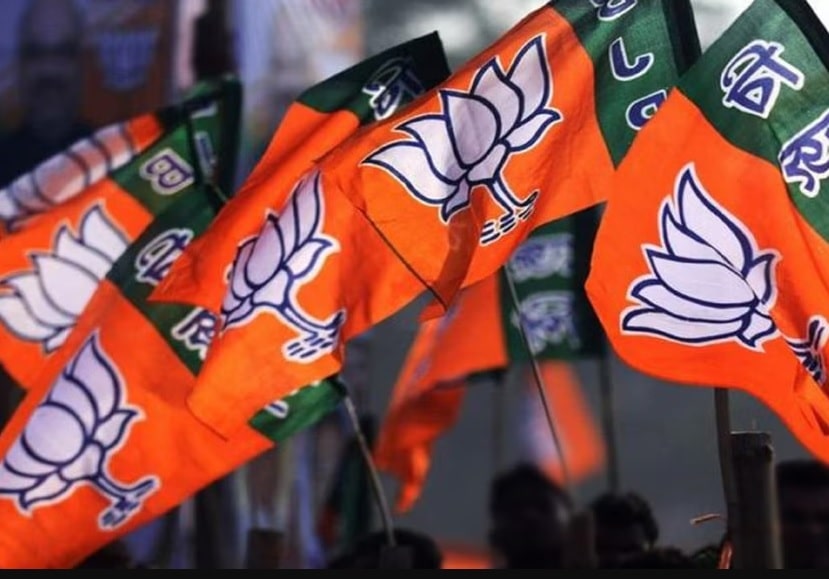
One year without a party president is unusual—especially for a party known for discipline and structure. The BJP, the country’s ruling party, is yet to elect a new national president even though J.P. Nadda’s extended term expired in June 2024. With names swirling and silence from the top, the delay has sparked intrigue—not just over who will take charge, but why the party’s leadership process is gridlocked.
An election not held for a year raises more eyebrows. It’s a party election, but all eyes are on who will occupy the BJP’s presidential chair—though few have illusions about the post’s power while the party is in government.
J.P. Nadda’s term officially ended in June 2024, but he continues, unsure of whom to hand over the baton to. A year-long search has yielded no clear successor. Are there no names in circulation? On the contrary, there are many— some openly discussed, others whispered. Among the top contenders are Manohar Lal Khattar, Bhupender Yadav, Dharmendra Pradhan, Shivraj Singh Chouhan, and Prahlad Joshi. Even the name
of the powerful Lt Governor of Jammu and Kashmir has come up—though he may be eyed for the Vice President’s post instead. At times, even Nitin Gadkari and Rajnath Singh have been mentioned. It’s all in the realm of speculations.
Though senior BJP leaders haven’t firmly backed any of the three women in the race, the names of former Andhra Pradesh BJP chief Daggubati Purandeswari, Mahila Morcha president Vanathi Srinivasan, and Finance Minister Nirmala Sitharaman are doing the rounds.
The RSS has suggested so far one name – Sanjay Joshi, known for his grassroot contact and organisational acumen. It’s certainly anathema for top BJP leaders. Will there be consensus at the top?
That’s the key question. Every name carries baggage. Some are seen as unsuitable for the demanding
position. Despite the party’s reputation for cohesion, different leaders have different loyalties—within the BJP and the Sangh. None in the fold agrees to a power struggle! But the evolving situation in the south and a number of elections in early 2026 are likely to influence the decision.
The matter has hit another roadblock—with the RSS. The parent organisation is taking a measured view. It is not in favour of parachuting someone into the role particularly amid a turbulent parliamentary session and complex political scenario. The present session has faced a blockade, mainly over the Bihar special
intense review of electoral rolls, except the two-day fiery deliverance on Operation Sindoor. The Opposition charged all its salvos on diplomacy, decision making, governance, economy, terror, Jammu & Kashmir and US President Donald Trump’s tariff assault.
The RSS wants a person who understands the complex organisational machinery and can navigate a politically sensitive post-2024 environment, especially with a resurgent opposition and the Congress gaining ground. Perhaps the BJP is taking a cue from the Congress, which after decades of nominations, finally held a presidential election. The Congress paid the price for its neglect—its base eroded. In contrast, Rahul Gandhi’s padyatras have helped revive its image, much like the groundwork laid by leaders like Lal
Krishna Advani and Murli Manohar Joshi that helped the BJP’s rise in the 1990s and again in 2013 ahead
of Modi’s ascent in 2014.
The RSS seems keen to revive that internal energy. But not everyone in the BJP agrees. A charismatic
party chief is seen by some as a threat to the limelight of some key government functionaries.
Reportedly, the RSS has not gone beyond the name of Sanjay Joshi. Despite other names being floated,
the Sangh is said to have cold-shouldered them. Analysts interpret it as differences within the fold.
Maybe it reveals dynamics of the parent’s eagerness to establish semblance of its primacy.
Interestingly, Prime Minister Narendra Modi visited the RSS headquarters at Nagpur in January. RSS chief, sarsanghchalak, Mohan Bhagwat returned the gesture with a visit to Modi’s Delhi residence in April. Still, the leadership issue remains unresolved.
Officially, the BJP says elections to 50 percent of its 34 state and UT units are still pending, and until those are complete, the central election can’t be held as per the party constitution. In several states, presidents have been appointed, but other office-bearers and executive members remain unnamed. It is interpreted as internecine contests even if not a strife.
Even without ballots, BJP’s internal elections are a complex, multi-layered process. The sangh keeps a keen eye. Discussions and scrutiny are intense—as seen in West Bengal, Tripura, and Telangana.
Currently, the process is underway in Uttar Pradesh, where nearly 10 claimants from various caste, regional, and ideological groups are in the fray. A state president must have wide acceptability across factions—not an easy trait to find. Once chosen, the RSS and BJP rarely change state chiefs until the next election.
Once the UP issue is settled, the national president may be named. If that doesn’t happen before the Bihar elections, expected to be announced by October, Nadda may continue.
There are whispers of a final decision by mid-September, ahead of the annual shraaddha period. The BJP and Sangh know how to reach a consensus—and a surprise may be in store. All eyes are stuck.

Comments are closed, but trackbacks and pingbacks are open.